
- info@hongkong.su
- Wechat id: iurlov
Hong-Kong Maritime Museum

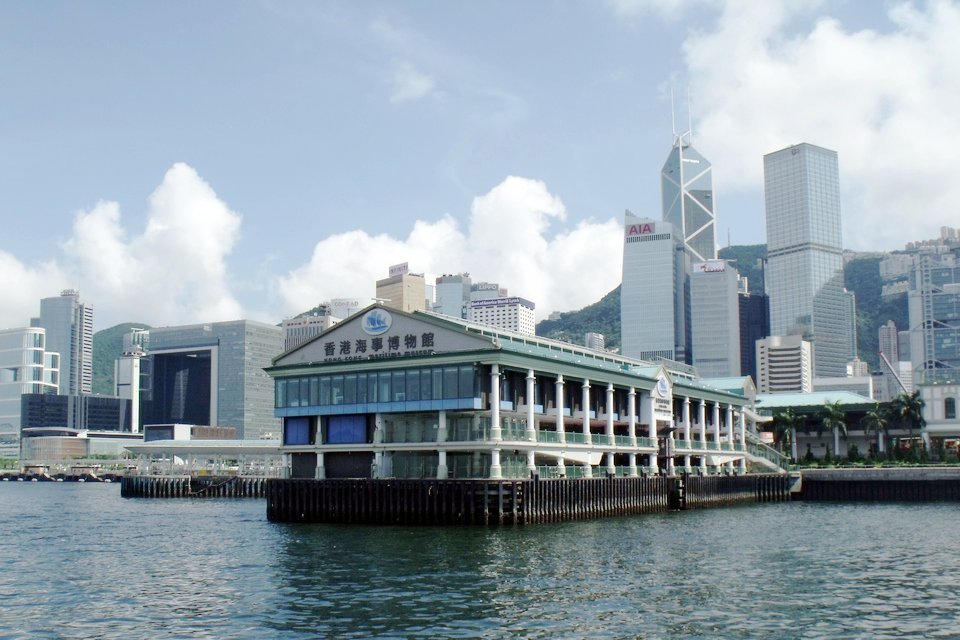
Hong-Kong Maritime Museum (香港海事博物館 – It is a non-profit educational institution funded by the international shipping community and the Hong Kong Government. The museum opened in September 2005 at Murray House in Stanley and moved in 2013 to Pier 8, in the center of the waterfront of the Central Port. Today, the Museum attracts 100,000 visitors annually, where more than 13 objects are represented on 4,400 square meters in 13 galleries on three levels. All rooms offer views of the lively Victoria Harbour.
The Hong Kong Maritime Museum (HKMM) is a vibrant cultural institution dedicated to preserving, collecting, and displaying objects that tell the story of trade and the sea in Hong Kong and the Pearl River Delta. Conveniently located in the picturesque Victoria Harbor at Central Pier No. 8, HKMM opened in 2005. HKMM, a non-profit registered charitable organization, is supported by the shipping industry, the business community, individuals, and the Hong Kong SAR Government. HKMM has 15 galleries, including a venue for special exhibitions and events, a resource center, a rooftop cafe, and a gift shop. HKMM promotes the history and heritage of Hong Kong, China and Asia, as well as the important role that ships and the sea play in our past, present and future. It also offers visitors a variety of public programs, including guided tours, seminars, public talks, and school, community, and family events.
The museum illustrates how China, Asia, and the West have contributed to the development of boats, ships, maritime exploration and trade, and naval warfare over the centuries. Focusing on the coast of Southern China and the surrounding seas, it also covers global trends and provides a comprehensive account of Hong Kong’s growth and development as a major global port and maritime hub.
The museum features semi-permanent and special exhibitions, interactive expositions, educational events, a cafe and a museum store. A dedicated exhibition and event space, resource center, rooftop cafe, and gift shop complement the experience and patrons of visitors and the Hong Kong community are actively involved in education and community programming offered to schools, community groups, and families.
Collections:
ceramics
The fine ceramics of the Great Chinese trade, so coveted by consumers in Western countries, has become perhaps the most important trade between China and the West.
models
The vessels, so essential for transporting goods and people, have been built in huge numbers and in many designs since ancient times. Built according to the availability of local materials and designed to meet local needs, these ships – if all of them had been preserved – could have provided so much information about the evolution of shipbuilding and maritime trade.
Marine tools
Since the ships first set sail, sailors have been looking for ways to build the shortest route to their destination and predict conditions at sea. The museum’s collection of navigation instruments tracks the gradual progress of location, direction, and weather detection equipment.
Paintings
The use of pigment on a surface has long been an expression of self for artists, giving a modern account of the time in which they live, exchanging ideas, recording scenes or simply conveying something beautiful.
Painting by Alexander Hume
This giant panoramic stage (gouache on silk, 91.5 cm high, 276.5 cm wide) is believed to have been created in a Cantonese studio. Made specifically for the European market, it shows a Western naturalistic landscape style mounted in a traditional Chinese scroll format. This classic part of the Sino-Western merger illustrates the starting point of Canton’s trading system 250 years ago. The painting on chintz also highlighted the rapid development of the Chinese silk trade at that time.
photo
Photography is a vital source of historical information, and the view through a camera lens adds true detail to people, fashions, scenes, and objects in a way that an artist, no matter how talented, cannot. Hong Kong’s history, from a tiny trade link to an international maritime hub with a famous skyline, is well documented in photographs.
Galleries:
KM Koo Ship Simulator
This new facility is located on the A-deck of the Museum, which was officially opened on April 29, 2016. It allows visitors to control various vessels, including a container barge, a speedboat, or even the famous historical “Star Ferry”, and learn different sailor roles in the simulator to experience an exciting and authentic “sea voyage” through the waters of Hong Kong and Victoria Harbor!
Robert Y.T. Chen Gallery – Traditional Maritime China
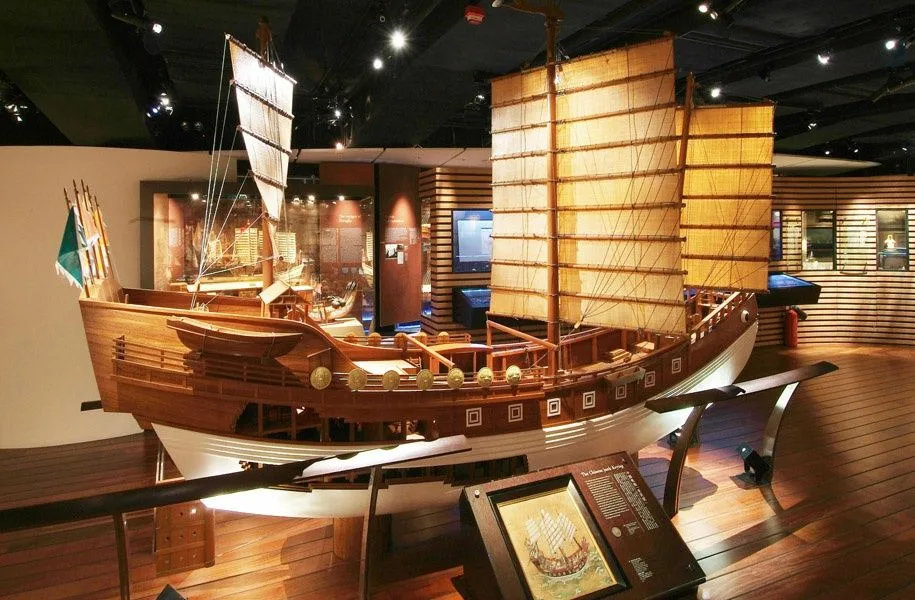
Robert Y.T. Chen Gallery presents the maritime world of traditional China, tracing the roots of its famous and peculiar sailing garbage hull and drilling rig from the earliest days of rafts, earthlings and corals.
The D L Wu Keying Display is a pioneering journey through the key
The unusual Keying model, which the Museum will be lucky to see on this display, was built on a scale from 1 to 12. The three-masted Chinese merchant junk, built of teak, was the first junk to sail around the Cape of Good Hope.
Pacific Marine Gallery – Sea Bandits
Piracy is a very serious problem for sailors and shipowners today, and it has been a scourge around the Chinese seas for centuries.
T Y Chao Gallery – The Creation of Victoria Harbor
The T Y Chao Gallery celebrates Hong Kong’s development as a port from 1841 until the end of the Japanese occupation and the British reoccupation in 1945.
Swire Gallery – Hong Kong Ships and Shipyards
The first section of the Swire Gallery reflects the growth and success of the Port of Hong Kong, highlighting how appropriate it is for the Hong Kong Maritime Museum to be located on the waterfront.
K H and K W Koo Gallery – The first marine modernization in China
The main focus of this gallery is on the issue of ensuring the safety of seafarers at sea, describing how today’s measures have evolved in China, as well as the contributions of historical figures such as Li Hong Zhang.
Swire Gallery – Creating a modern Port
This second section of the Swire gallery describes the modernization of the Hong Kong port over the past 60 years, when changes in China’s political orientation turned it into the main center of the region, and modernization in the shipping industry caused huge growth.
C.C. Liu – Gallery
This first section of the Parakou Gallery refers to the movement of people, not goods.
C. C. Liu Gallery – Fun on the water
The second section of the Parakou gallery is dedicated to water sports in Hong Kong and entertainment: fun on the water, fun in the water and under it.
Sir Yue-Kong Gallery – Underwater World
The Sir Yue-Kong Pao Gallery explores the ocean: a rich, fragile, contested and still little understood part of the Earth.
COSCO Gallery – Sounds of the Sea
The crashing of waves, the sucking and roaring of the return jet, the ringing of tow towers, the rhythmic beat of a large motor ship, the whistling of a propeller, the screeching, whistling and roaring of the wind in the rigging – all sailors will be familiar with these sounds of the sea.
COSCO Gallery – people of the sea
The second section of the COSCO gallery explains how the maritime industry has evolved from local family-owned enterprises to global enterprises. It traces the history of Chinese trade associations from guilds to large groups such as the Hong Kong Shipowners Association (HKSOA), which, in addition to shipowners, includes Hong Kong residents serving the industry such as ship operators, ship controllers, ship brokers, insurers, financiers, and lawyers.
Marine ticket office KC – Marine communications
For those of us who live on land, communication has long been about picking up a phone. Until recently, it was not so easy for a sailor to go to sea knowing that there would be no contact with family and friends during the voyage. However, the ship had to somehow contact other ships and land, send or receive danger signals, ask for advice, or keep abreast of the news. The K C Marine Gallery illustrates how brilliant humanity can be.
Frank Cao Gallery – Navigation and Meteorology
The navigation bridge is the eyes and brain of the ship. The Frank Cao Gallery presents early and basic navigation techniques, explaining how they work, how the vessel is steered, and how distances are recorded. The original invention of the compass in China is a highlight in this gallery, and the history of navigation can be traced back to modern computer systems with integrated bridge systems.
Hong Kong International Terminal Gallery – Gallery Gallery
This gallery presents a dynamic real-time display of the museum: Victoria Harbor Live. Hong Kong, the vibrant, vibrant harbor that is so famous today, has a behind-the-scenes history of evolution that visitors can experience through specially equipped binoculars. Go back to 1846, for example, to the place on HMS Iris where Lieutenant Heath stood to draw a panorama of Hong Kong, or 1841, when the harbor was 50 percent larger than it is today.
Ocean Line Holdings Gallery – The Companionways
As with all ocean–going vessels, long passages, or related routes, pass through the museum. While aboard the ship, a companion can connect the bridge to the nearest headquarters, in the case of a museum, galleries associated with support include a library and research offices.
Special exhibitions and Events Gallery
The Hong Kong Maritime Museum’s Special Exhibitions and Events Gallery has been the venue for hundreds of public and private exhibitions, lectures, international conferences, concerts, product launches, parties, and performances since opening at Pier 8. Conveniently located on the waterfront of the Central Port, the location overlooks Victoria Harbor against the backdrop of the Hong Kong skyline
The mission:
The mission of the Hong Kong Maritime Museum is to promote a deeper knowledge of the maritime history of Hong Kong, China and Asia and the vital role that ships and the sea play in our past, present and future. We do this by providing the community and visitors with an exceptional museum experience and opportunities to learn about Hong Kong’s heritage and how it connects to the rest of the world.
The Vision:
The Hong Kong Maritime Museum is to become a center of excellence in Hong Kong for the study of local and regional maritime and shipping issues.
I’ve been here about 100 times.
Admission costs 30 HKD
.
Alex iurlov – your tour guide in Macau, Hong Kong and China!
+852 68553629 (WhatsApp, Telegram, Wechat)
Wechat id: iurlov
info@hongkong.su
88 total views, 2 views today